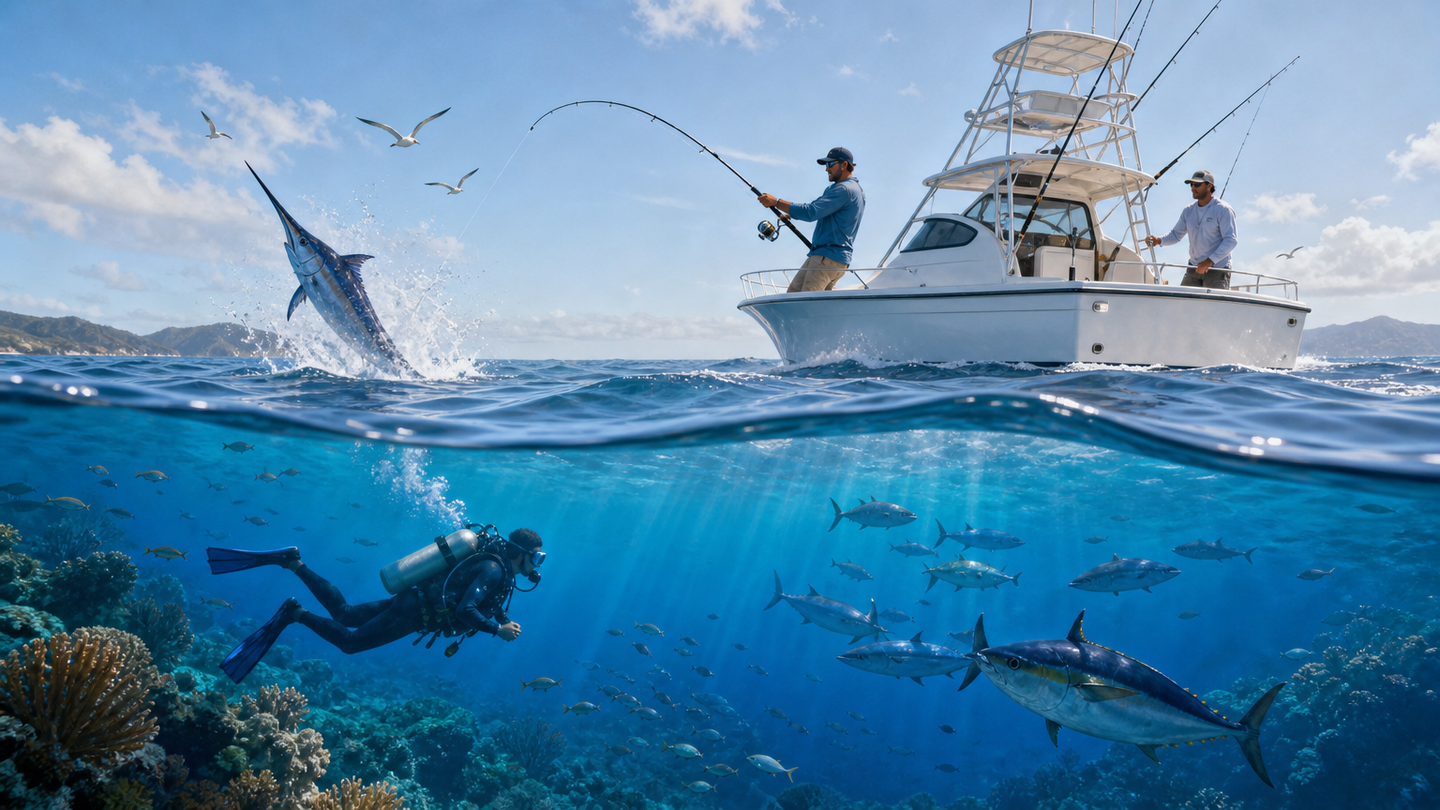
Deep-sea fishing and offshore diving trips offer two very different ways to experience open water. One is centered on the pursuit of fish and the rhythm of working lines; the other is about descending into an underwater environment that cannot be reached from shore. Both depend on the same essentials: a capable boat, sound planning, appropriate experience, and respect for the waters and rules of the destination.
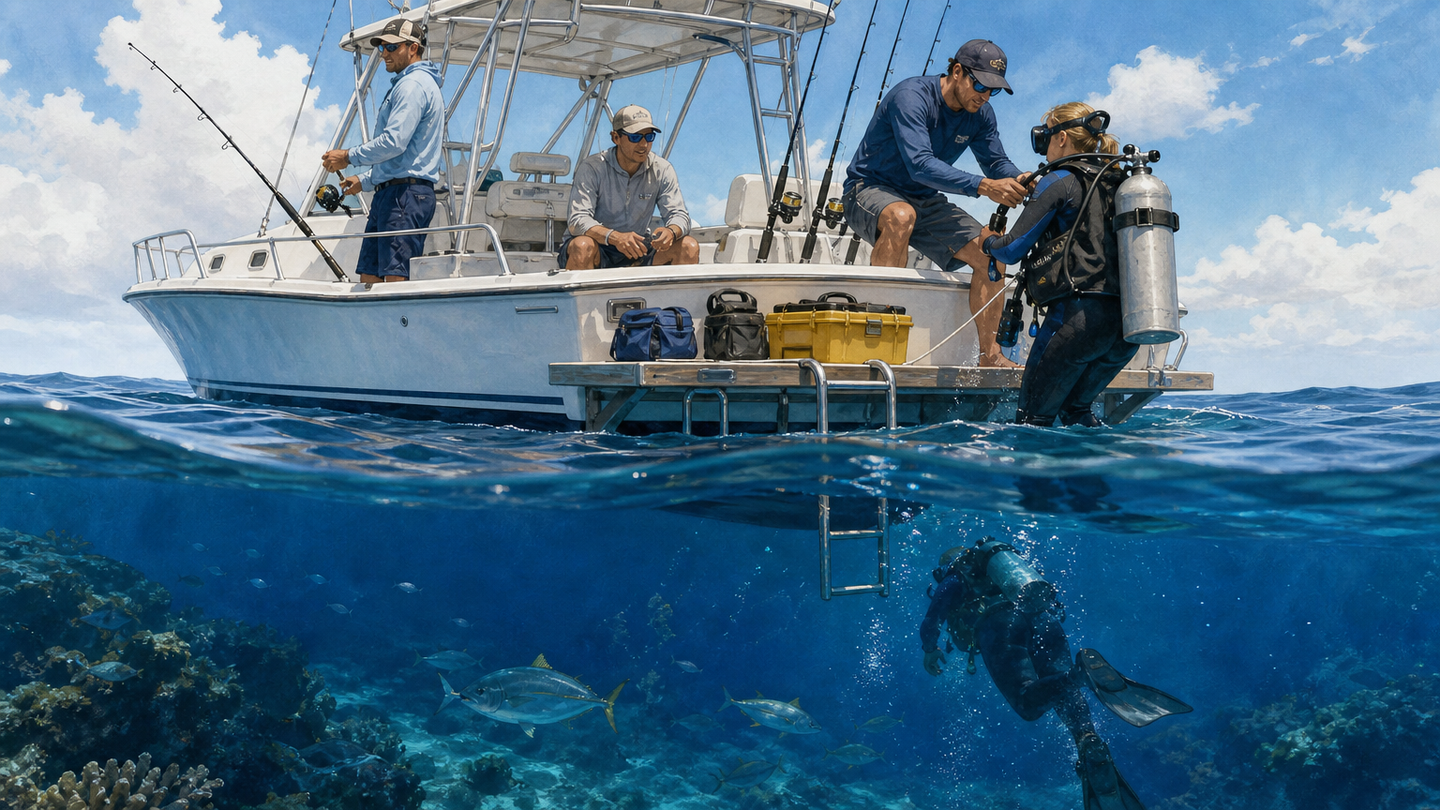
For Gulf Coast visitors and residents, offshore destinations can involve a meaningful run from land. Flower Garden Banks National Marine Sanctuary, for example, lies roughly 80 to 125 miles from the Texas and Louisiana coasts. That distance helps explain why an offshore outing is not simply a longer version of a beach-day activity. Travel time, changing conditions, boat procedures, and personal readiness all shape the experience.
Understanding Offshore Fishing and Diving Trips
A deep-sea fishing trip generally takes anglers beyond nearshore waters to fish from a vessel in deeper offshore areas. The practical focus is usually on boat handling, fishing methods, lawful gear, and the way fish are managed after they are caught. A diving trip has a different pace: participants prepare equipment, enter the water in organized groups, follow the vessel’s procedures, and return to the boat after their dive.
Some offshore operators may accommodate anglers and divers on different outings, but these activities should not be treated as interchangeable. Fishing needs room for lines, gear, and active movement on deck. Diving requires careful entry and exit procedures, a clear system for tracking people in the water, and surface awareness from the vessel. When divers are in the water, a moored dive vessel in Flower Garden Banks National Marine Sanctuary must display dive flags.
The setting also matters. Offshore conditions can change more quickly and feel more demanding than protected coastal water. Weather, wave height, and currents may be unpredictable, and several sanctuary dive sites are suited to intermediate or advanced divers. The appeal of offshore travel is real, but so is the need to choose an outing that matches your actual comfort and capability rather than your most ambitious plan.
Choosing a Trip That Fits
Start by deciding what you want the day to be about. A fishing-focused trip is the better fit if the main goal is time with rod and line, learning onboard fishing routines, and participating in the practical work of an offshore catch. A dive-focused trip suits people who want their time organized around underwater exploration and who already have the experience appropriate to the conditions.
Your experience level should guide the decision early. A person who is comfortable in the water is not automatically prepared for an offshore dive, just as a casual shore angler may need help adapting to a boat-based fishing day. Offshore trips introduce motion, open-water exposure, equipment logistics, and less immediate access to shore. Be candid about previous diving, boating, and fishing experience when choosing an outing.
It is also useful to think about the trip’s physical demands. Offshore travel can mean extended time aboard a moving vessel before the primary activity begins. Diving adds the work of managing personal equipment and moving safely between deck and water. Fishing can involve standing, handling tackle, and responding quickly when a line is active. Choose a plan that leaves room for enjoyment rather than turning the day into an endurance test.
If your group has mixed interests, avoid assuming everyone will enjoy the same format. Someone excited by fishing may find repeated dive preparations slow, while a diver may not want their limited offshore time organized around fishing. A clearly fishing-oriented or diving-oriented trip often produces a better experience because the boat routine, equipment setup, and expectations are aligned from the start.
Practical Considerations Before Leaving Shore
Offshore adventures begin with the vessel plan. Know whether the outing is designed for fishing or diving, what participation is expected of guests, and how the operator handles offshore conditions. The sanctuary itself does not operate trips, so visitors use independent charter and dive listings when arranging transportation and activities.
Regulations are part of trip planning, not an afterthought. Rules may change with the destination, the jurisdiction, the species involved, and the type of activity. In Flower Garden Banks National Marine Sanctuary, anchoring is prohibited. Recreational fishing is limited to conventional hook-and-line gear, and spear fishing is prohibited. These restrictions are specific to the sanctuary, so do not assume they apply in the same way everywhere offshore.
Licensing can also depend on where you fish and where you land your catch. Anglers landing in Texas fish taken in federal waters need a Texas fishing license and saltwater endorsement, while fishing rules in federal waters may differ from those in state waters. Treat that distinction as a basic planning issue, especially when a trip travels far enough offshore to cross jurisdictional boundaries.
Divers and snorkelers do not need a sanctuary-issued permit to visit Flower Garden Banks National Marine Sanctuary, but they must follow the sanctuary’s regulations. That does not remove the need for personal readiness. A diver should be able to use their equipment comfortably, follow the boat’s entry and return procedures, and make conservative choices when offshore conditions are less welcoming than expected.
Putting the Guidance to Use
A successful offshore day starts with a realistic match between the activity, the group, and the conditions. Choose fishing when your priority is angling and the active work of fishing from a boat. Choose diving when underwater time is the central purpose and your experience fits the site. If either activity will take place in a managed area, build the applicable rules into the plan from the beginning.
Once aboard, pay attention to the boat routine. Offshore trips work best when guests know where to keep personal items, respect the working areas of the deck, and follow directions during movement, equipment handling, water entry, and return. For divers, that includes treating dive-flag requirements and surface awareness as central safety practices, not as minor formalities. For anglers, it means using only the gear and methods allowed at the destination.
The best mindset is attentive rather than rushed. Conditions offshore may alter how a day feels, even when the destination is familiar. Let the experience be shaped by safe vessel practices, the needs of the group, and the rules that protect the area you have come to enjoy. Before making plans, confirm current trip operations and applicable requirements with the operator and relevant government agency.
Information may contain errors, omissions, or outdated details. Confirm time-sensitive information with the relevant official or authoritative source.